Migration, Space, Art and Care
Symposium presented by the Amsterdam Research Centre for Migration (ARC-M) and the ERC project ReloCare
- Start date
- 29 January 2026
- End date
- 30 January 2026
- Room
- B5.12
We use care as both topic and method to think through migration and space, foregrounding the often invisibilized work of maintaining and improving the worlds we inhabit, often under limited or pressurized circumstances which may themselves carry generative potential. Care opens space for improvisation and collaboration, while migration offers a lens to trace movements and transnational connections. Space provides a framework for mapping (historical) relations and imagining alternative geographies. Art functions as both practice and method, creating dialogical formats and alternative ways of knowing.
The workshop will highlight practice-based reflections. Examples could for example be about:
- participatory approaches involving research participants and partners in the field
- new collaborative forms among team members
- art-based methods that create dialogical, co-laboring and multisensory formats
We aim to foster an honest exchange about the extra work required to sustain collaborative research, and to imagine new spaces of engagement and knowledge production.
Co-facilitators
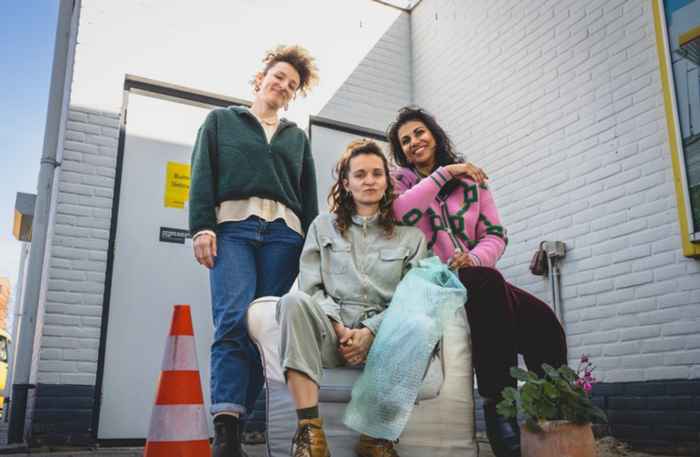
The workshop will be co-facilitated by MOHA, a collective of artists working in the intersection of Art, Care and Society. MOHA means moss in Hungarian.
“We chose the name because it reflects our approach. Moss grows in the smallest cracks. It is resilient, adaptive, and collaborative. And also soft. Our work is all of these things."
Public lecture and borrel
The workshop will be followed by a public lecture by Professor Geraldine Pratt and the Anthropology Department’s New Year borrel.