Violence beyond the Conflict Zone
A One-Day Symposium on Migration, Return, and the Gendered Continuum of Harm
- Date
- 16 April 2026
- Time
- 09:00 -15:00
- Room
- B9.22
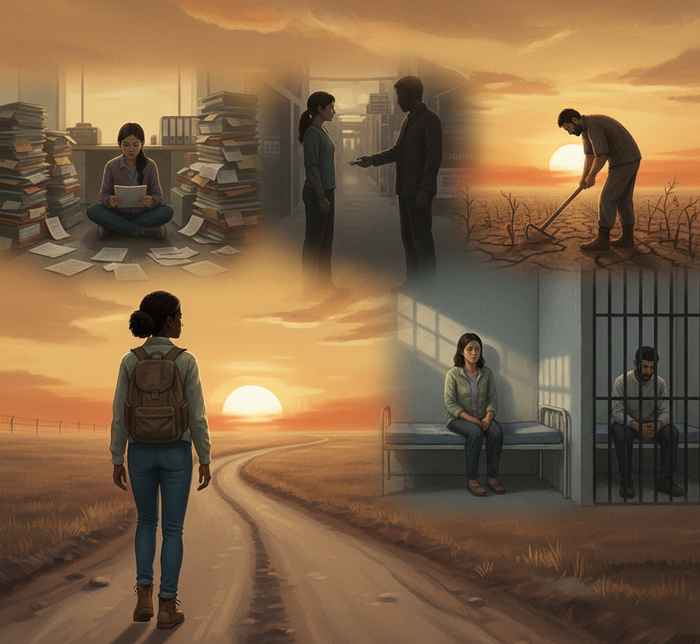
Conflict does not end when people cross a border. For many migrants-particularly women and girls-escape from conflict marks not the end of violence, but the beginning of a complex and enduring continuum of harm. From exploitation in transit and sexual and gender-based violence to trafficking, detention, and structural marginalization during return or resettlement, conflict-related violence unfolds across time, geography, and institutional systems.
By reframing conflict-related violence as a continuum rather than a bounded event, this symposium seeks to deepen understanding of how harm persists across both space and time. Through interdisciplinary dialogue and collaborative engagement, we aim to bridge academic inquiry and real-world practice to contribute to more just, protective, and survivor-centred systems.
Featured speakers
- Professor Liza Schuster – Retired scholar and expert on migration decision making and migration policymaking.
- Dr. Gillian Kane – Ulster University
- Mr Abdullah Mohammadi – Uppsala University
- Representative – European Union Agency for Asylum
- Representative – Federal Judicial Police Brussels, Human Trafficking, Human Smuggling and False Documents Unit
- Representative – The Salvation Army, Amsterdam
- Dr. Sarah Adeyinka – Department of Political Science, University of Amsterdam
Symposium focus
Participants will engage with key questions, including:
- How does conflict-related violence extend across migration trajectories?
- In what ways do migration governance and humanitarian systems reproduce structural harm?
- How are women and girls uniquely affected by displacement, return, and reintegration?
- What would survivor-centred approaches to prevention, protection, and accountability look like in practice?
Case discussions will span detention centres, European border zones, and return contexts including Nigeria, Libya, and Afghanistan.
Format
The symposium will include:
- Keynote Address - Opening reflections on the gendered continuum of violence in conflict and migration.
- Presentations - Scholarship on structural violence, post-conflict displacement, and gender-based harm.
- Panel and Roundtable Discussions - Practitioner insights and survivor-informed research.
- Collaborative Breakout Sessions- Developing practical, survivor-centred recommendations for policy and practice.
Who should attend?
- Researchers in migration, conflict, gender studies, and international development
- Humanitarian and NGO practitioners
- Policy professionals working in migration governance or protection
- Advocates and civil society actors
- Graduate students and early career scholars
This symposium is funded by the Amsterdam Centre for Conflict Studies (ACCS) and the Amsterdam Research Centre for Migration (ARC-M).